
Loading...
Serving Haltom City, TX and surrounding areas. (682) 271-0566
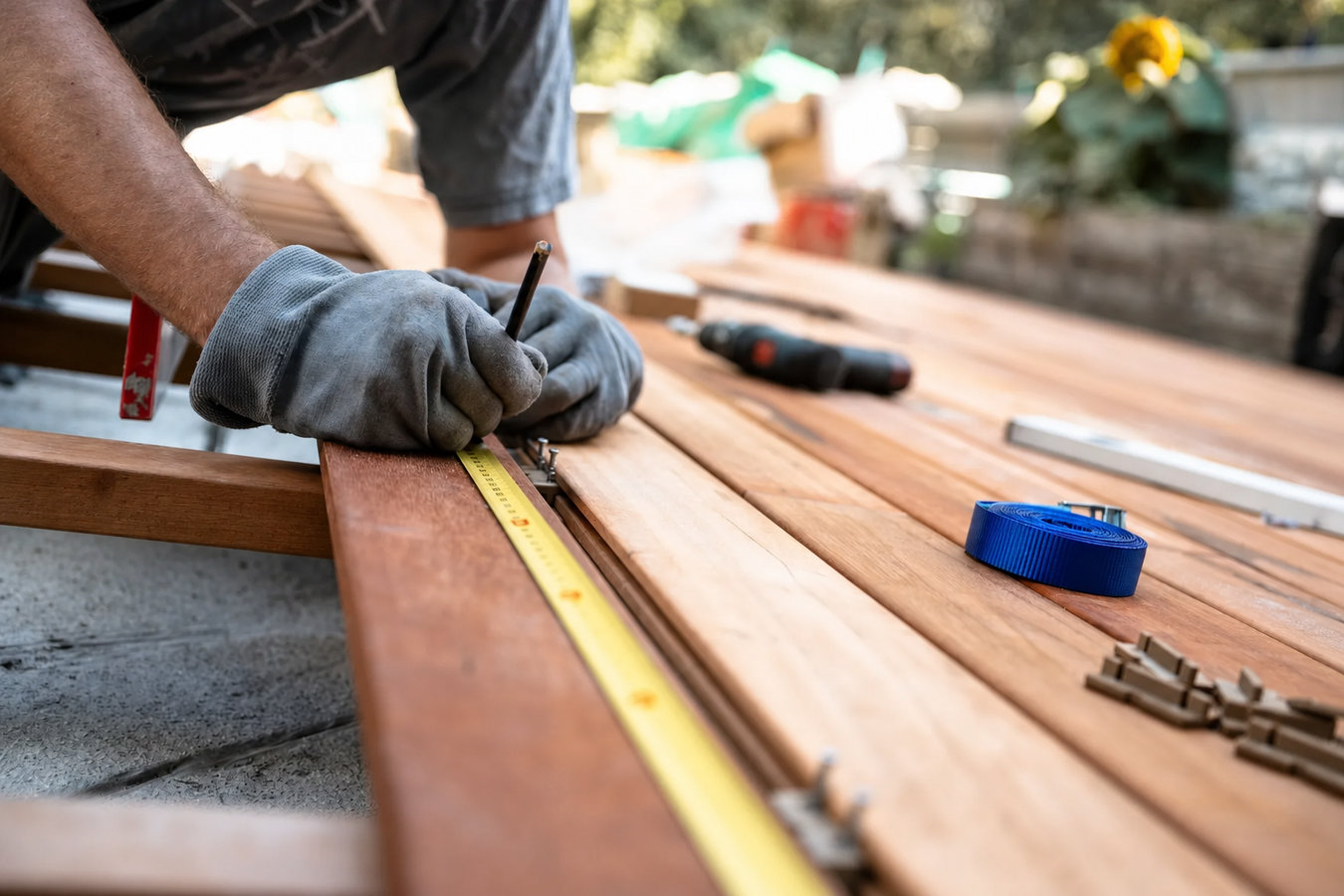
Soft boards, wobbly railings, storm damage, or a deck that has simply reached the end of its life - we walk it, tell you honestly what we find, and quote the right fix in writing before any work begins.
Deck repair and replacement in Haltom City means walking the structure, checking boards and frame and footings, and giving you a straight answer - a few soft boards can often be repaired for a fraction of the cost of a full rebuild, but if more than a third of the deck is compromised or the frame underneath is rotting, replacement almost always makes more sense long-term.
A lot of decks in Haltom City were built during the 1970s and 1980s and have never been replaced. North Texas heat, clay soil movement, and spring hailstorms do real work on an aging structure. Whether your deck needs targeted repairs or a complete rebuild, we can also discuss material upgrades during the assessment - including options like cedar wood deck construction if you are leaning toward starting fresh with a better material.
Every job starts with an on-site walk and a written estimate. No one picks up a tool until you have reviewed and agreed to the scope and cost.
If you step on a board and it gives a little - almost like pressing on a sponge - that board has started to rot from the inside. In Haltom City's climate, this can happen faster than you might expect when boards are not properly sealed against summer heat and seasonal rain. Do not ignore soft spots - they can become trip hazards quickly, and the rot often spreads to the boards around them.
A railing that moves when you lean on it is not just annoying - it is a safety issue, especially if you have kids or elderly family members using the deck. Loose railings usually mean the posts anchoring them have worked loose from the frame, which can be a repair job if caught early or a sign of deeper structural problems if the frame itself has shifted.
If you can see daylight between the ledger board and the house itself, that connection has started to fail. In Haltom City, the clay soil movement that happens through the year can gradually pull a deck away from the house if the original installation did not account for it. This is a structural issue that needs a contractor's eyes, not a DIY fix.
After any significant spring storm in the DFW area, walk your deck and look closely at the surface. Hail can crack boards, and high winds can loosen fasteners and railings even when the damage is not immediately obvious. Boards that are cracked or deeply splintered will hold water in those cracks, which accelerates rot - so storm damage that looks cosmetic can become structural if you leave it for a season.
We handle everything from board swaps and railing fixes to full tear-out and rebuild. The assessment visit is where we separate a repair job from a replacement job - and we will walk you through both options with honest cost numbers so you can make the call yourself. If you decide to replace, we can build with cedar wood, pressure-treated lumber, composite, or a combination - the choice depends on your budget and how much maintenance you want to do going forward.
After a complete replacement, we also offer deck staining and sealing to protect the new surface before its first Texas summer. For wood decks, getting a sealant on before that first season makes a measurable difference in how long the boards stay tight and splinter-free. We can schedule that as part of the same project or as a follow-up after the wood has had time to dry and settle.
Best when damage is limited to a few boards, a railing section, or fasteners that have worked loose - the structure is sound, just the surface needs attention.
Suited to decks where the ledger board, joist hangers, or posts have been compromised but a full replacement is not yet warranted.
Right for decks where the frame has failed, rot has spread through multiple structural members, or the original build simply does not meet current standards.
Useful after any significant DFW hailstorm - we walk the deck, document the damage, and give you a written estimate you can use with your insurance company if needed.
Haltom City's housing stock is mostly from the 1950s through 1980s, and a lot of the decks on those properties are original or were added decades ago. Older decks were often built to standards that have since been updated, and many were built without accounting for Tarrant County's expansive clay soil - which means structural movement has been working on them for years. The DFW area also sits in one of the most active severe weather corridors in the country: spring storms bring hail and high winds that crack boards, loosen railings, and drive water into frames. When homeowners find damage after a major storm, the repair-or-replace question comes up fast, and having a contractor who gives you a straight answer rather than defaulting to the higher invoice matters.
We work on decks across Haltom City and the surrounding area, and the same clay-soil and heat conditions show up in every city we serve. Homeowners in Fort Worth, TX and Richland Hills, TX face the same repair drivers, and we build and repair to the same standard across all of those communities.
We ask what you are seeing - soft boards, wobbly rails, gaps at the house, or storm damage. We reply within one business day and schedule a visit to walk the deck in person.
We walk every inch of the deck, check the frame and posts underneath, and give you a written estimate that covers both the repair and replacement options - so you can make the decision with real numbers in hand.
If the project requires a city permit - which it will for structural repairs or full replacements in Haltom City - we handle the application. This step protects you at resale and ensures the work is inspected by the city.
We complete the repair or rebuild, clean up debris at the end of every workday, and do a final walkthrough with you before we leave. If a city inspection is required at completion, we schedule it and handle the close-out.
Free on-site assessment. Written estimate covering both repair and replacement options. No obligation.
(682) 271-0566We do not default to the bigger job. If a targeted repair will serve you well for years, that is what we recommend - with numbers to back it up. You get a clear explanation, not a sales pitch.
Structural deck work requires a city permit, and a permitted job protects you at resale and for insurance claims. We handle the permit application and coordinate the city inspection - details you can verify at Haltom City Building Inspections.
Clay soil movement and DFW storm seasons are the two biggest drivers of deck damage in this area. When we replace posts and footings, we set them for the soil conditions that actually exist here - not a generic spec from a national building guide. The Texas A&M AgriLife Extension has documented local soil behavior at agrilifeextension.tamu.edu.
Every project is quoted in writing before we lift a board. The number you agree to is the number on your final invoice. If we find something unexpected during demolition, we stop and talk to you before continuing.
A repaired or replaced deck that is properly permitted and built for local conditions gives you something a quick patch job never does - documentation that the structure is safe and approved, and confidence it will hold up through the next DFW storm season.
After a repair or replacement, a sealant or stain applied before the first Texas summer keeps the new surface protected and looking sharp.
Learn MoreIf replacement makes more sense than repair, cedar offers natural rot resistance and stays cooler underfoot than many synthetic materials.
Learn MoreFall booking slots are limited - reach out now and we will schedule your on-site walk before the busy season starts.